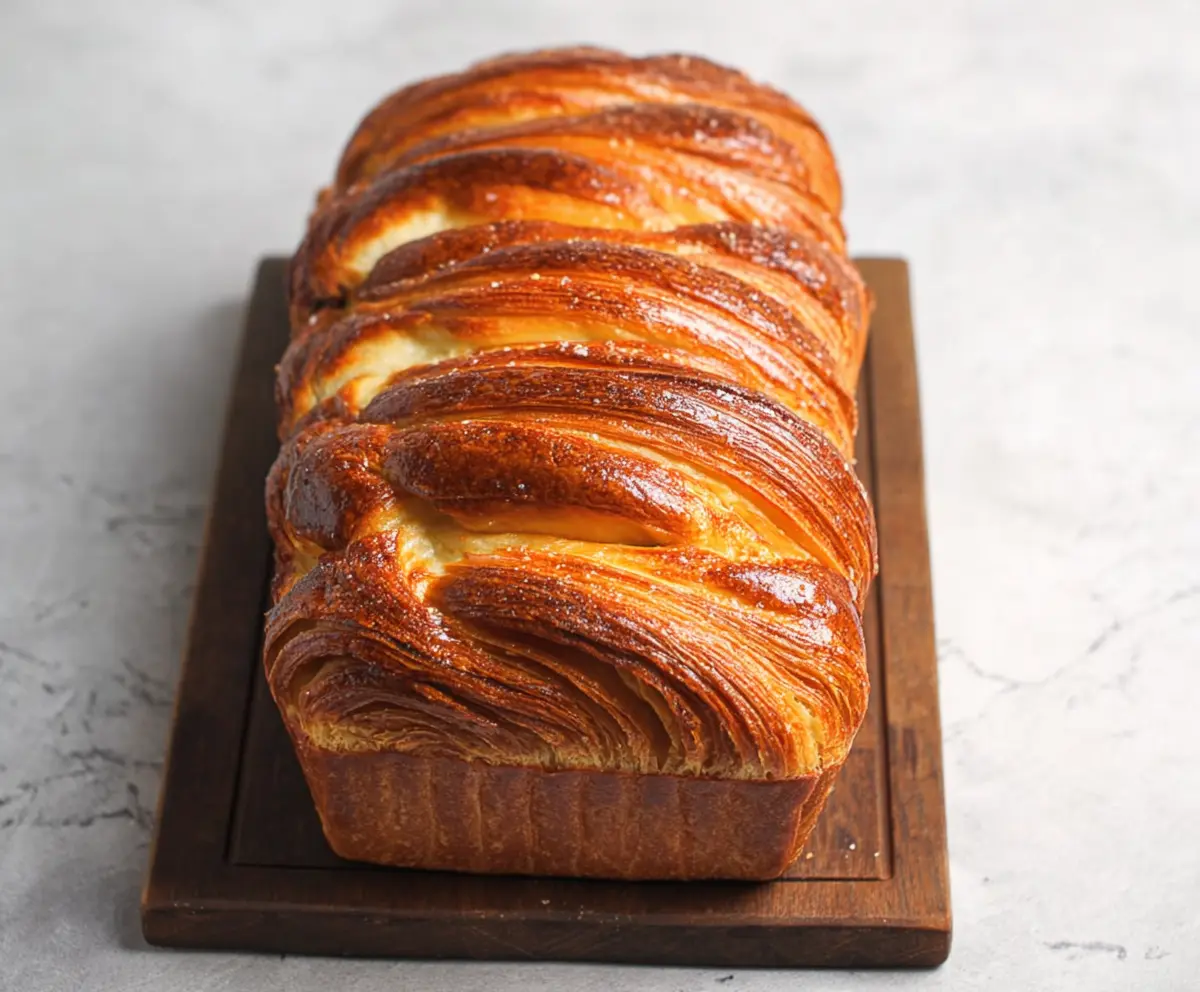
Croissant Bread Loaf is like your favorite flaky, buttery croissant stretched out into a big, soft loaf that’s perfect for slicing. It has all the layers and golden crust you love in a croissant, but you get to enjoy it in a way that’s easy to share or toast up for breakfast. The buttery flavor and light, airy texture make every bite feel special.
I love making this loaf when I want a treat that feels a little fancy but is still super cozy. It’s great fresh from the oven, when the smell fills the kitchen and the outside is perfectly crisp. One little tip I’ve learned is to slice it warm and add just a touch of jam or butter—it really brings out the flaky layers and adds a little extra yum.
It’s a perfect loaf to bring to brunch or to have on hand for a quick snack. Sometimes I toast a slice, then slide in some cheese or ham for a simple but delicious sandwich. It’s a crowd-pleaser since everyone gets the flaky goodness of a croissant without having to buy individual pastries. Croissant Bread Loaf always feels like a little celebration in bread form!
Key Ingredients & Substitutions
All-purpose flour: This gives the dough structure. For a bit chewier texture, you can try bread flour. If gluten-free is needed, a blend designed for baking is best, but the layers won’t be as crisp.
Butter: You’ll need cold butter for layering and melted butter for the dough. Use unsalted for best control of saltiness. European-style butter with higher fat content works wonderfully if available.
Yeast: Active dry yeast works well here. If using instant yeast, reduce the amount slightly and mix it straight with the dry ingredients.
Milk: Whole milk adds richness and softness. If dairy-free, use almond or oat milk but expect a subtle change in flavor and crumb.
How Do You Get Those Perfect Crunchy Layers in Croissant Bread Loaf?
The secret is laminating the dough properly. This means folding cold butter into the dough multiple times to create thin, flaky layers:
- Keep the butter cold but pliable—too warm and it melts into the dough, too hard and it breaks through.
- Roll the dough gently but evenly to keep layers intact.
- Chill the dough between each fold to relax gluten and keep butter firm.
- Use a sharp rolling pin and a clean surface to avoid sticking and tearing.
Taking your time with this process results in that beautiful layered look and a soft, flaky bite. Patience really pays off here!
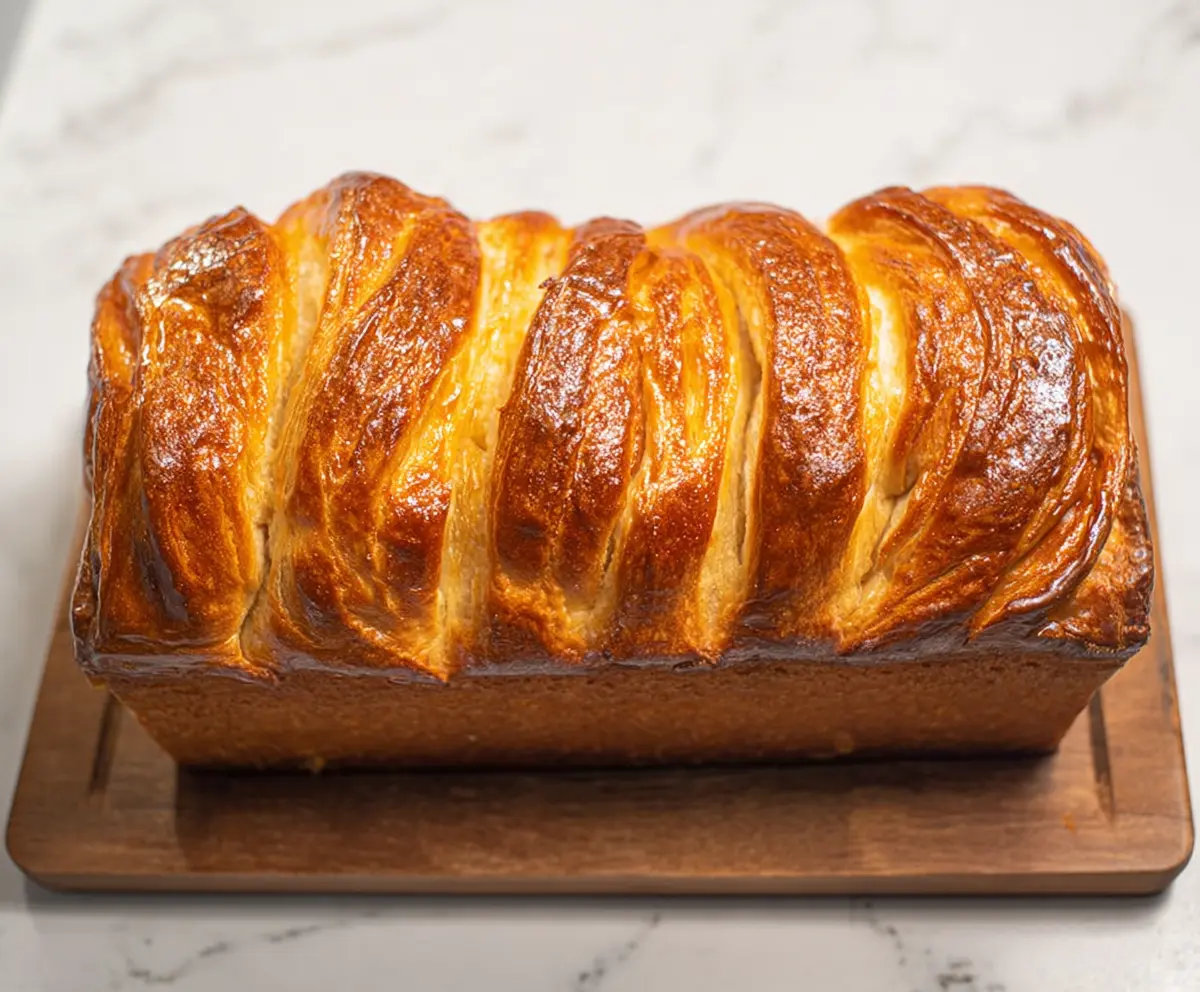
Equipment You’ll Need
- Mixing bowls – for combining ingredients and letting dough rise; use at least two sizes.
- Rolling pin – essential for flattening dough and butter evenly for perfect layers.
- Parchment paper – keeps the butter block and dough from sticking while rolling and folding.
- 9×5 inch loaf pan – shapes the croissant bread into a loaf that’s easy to slice.
- Baking sheet or tray – handy for catching any drips when transferring the loaf to the oven.
- Plastic wrap or clean kitchen towel – covers dough while proofing to keep moisture in.
- Pastry brush – great for applying the egg wash evenly for a shiny, golden crust.
Flavor Variations & Add-Ins
- Add cinnamon and sugar between layers before folding for a sweet, spiced twist like cinnamon rolls.
- Mix in chocolate chips or spread Nutella between folds for a rich, dessert-style loaf.
- Include finely chopped herbs (like rosemary or thyme) in the dough for a fragrant, savory version.
- Swirl in some cheese and ham slices before folding for a tasty breakfast or brunch loaf.
How to Make Croissant Bread Loaf?
Ingredients You’ll Need:
For the Dough:
- 4 cups (500g) all-purpose flour
- 1/4 cup (50g) granulated sugar
- 2 1/4 tsp (1 packet) active dry yeast
- 1 tsp salt
- 1 cup (240ml) whole milk, warm (about 110°F / 43°C)
- 3 tbsp unsalted butter, melted
- 1 large egg
For Laminating:
- 1 1/4 cups (280g) unsalted butter, cold
For Egg Wash:
- 1 egg
- 1 tbsp water
Optional Topping:
- Coarse sea salt, for sprinkling
How Much Time Will You Need?
This recipe takes about 20 minutes of active prep time including mixing and kneading. You’ll need around 1 to 1.5 hours for the first dough rise, plus multiple chilling times of 30 minutes each between laminations, and another 1 to 2 hours for the final proof after shaping. Baking takes about 35 to 40 minutes. Altogether, plan on roughly 5 to 6 hours, mostly waiting and chilling to get those flaky layers just right.
Step-by-Step Instructions:
1. Prepare the Dough:
Mix flour, sugar, yeast, and salt in a large bowl. In another bowl, whisk warm milk, melted butter, and an egg. Slowly add the wet mix into the dry ingredients, stirring until sticky dough forms. Knead the dough on a floured surface for 8-10 minutes until smooth and elastic. Place into a greased bowl, cover, and let it rise in a warm spot until doubled in size (1-1.5 hours).
2. Make the Butter Block:
Put the cold butter between two parchment sheets. Use a rolling pin to flatten and shape it evenly into a 7×7 inch square. Chill the butter block while dough rises.
3. Laminate the Dough:
Once the dough has doubled, punch it down and roll it into a 12×12 inch square. Put the butter block diagonally in the center. Fold each corner over butter to seal it inside. Roll gently into a 20×10 inch rectangle and fold like a letter into thirds. Turn the dough 90 degrees, roll out and fold again. Wrap in plastic and chill 30 minutes. Repeat rolling and folding two more times, chilling after each fold.
4. Shape and Proof:
After the last chill, roll dough into a 20×10 inch rectangle. Fold into thirds again and put it in a greased 9×5 inch loaf pan, fold side down. Cover and let rise until dough reaches the top of the pan, about 1-2 hours.
5. Bake the Loaf:
Heat oven to 375°F (190°C). Mix egg and water for egg wash and brush top of loaf gently. Optionally, sprinkle coarse sea salt for extra flavor. Bake 35-40 minutes until deep golden and hollow sounding when tapped. If it browns too quickly, cover loosely with foil.
6. Cool and Enjoy:
Let loaf cool 10 minutes in pan, then transfer to wire rack to cool completely. Slice and enjoy fresh or toasted with butter or jam.
Can I Use Frozen Butter for Laminating?
It’s best to use cold, but not frozen, butter for laminating. If your butter is frozen, thaw it in the fridge until it’s pliable but still firm enough to hold its shape for layering.
How Should I Store Leftover Croissant Bread Loaf?
Store leftovers in an airtight container or wrapped tightly in plastic wrap at room temperature for up to 2 days. For longer storage, freeze slices in a sealed bag for up to 1 month and toast them straight from frozen.
Can I Add Fillings Like Chocolate or Cheese?
Absolutely! You can layer chocolate chips, cheese, or herbs between folds during the laminating process for extra flavor. Just be careful not to add too much, or it might affect how well the layers form.
Is It Okay to Use Instant Yeast Instead of Active Dry Yeast?
Yes! If you use instant yeast, reduce the amount slightly (about 1 3/4 tsp) and mix it directly with the dry ingredients without proofing first.