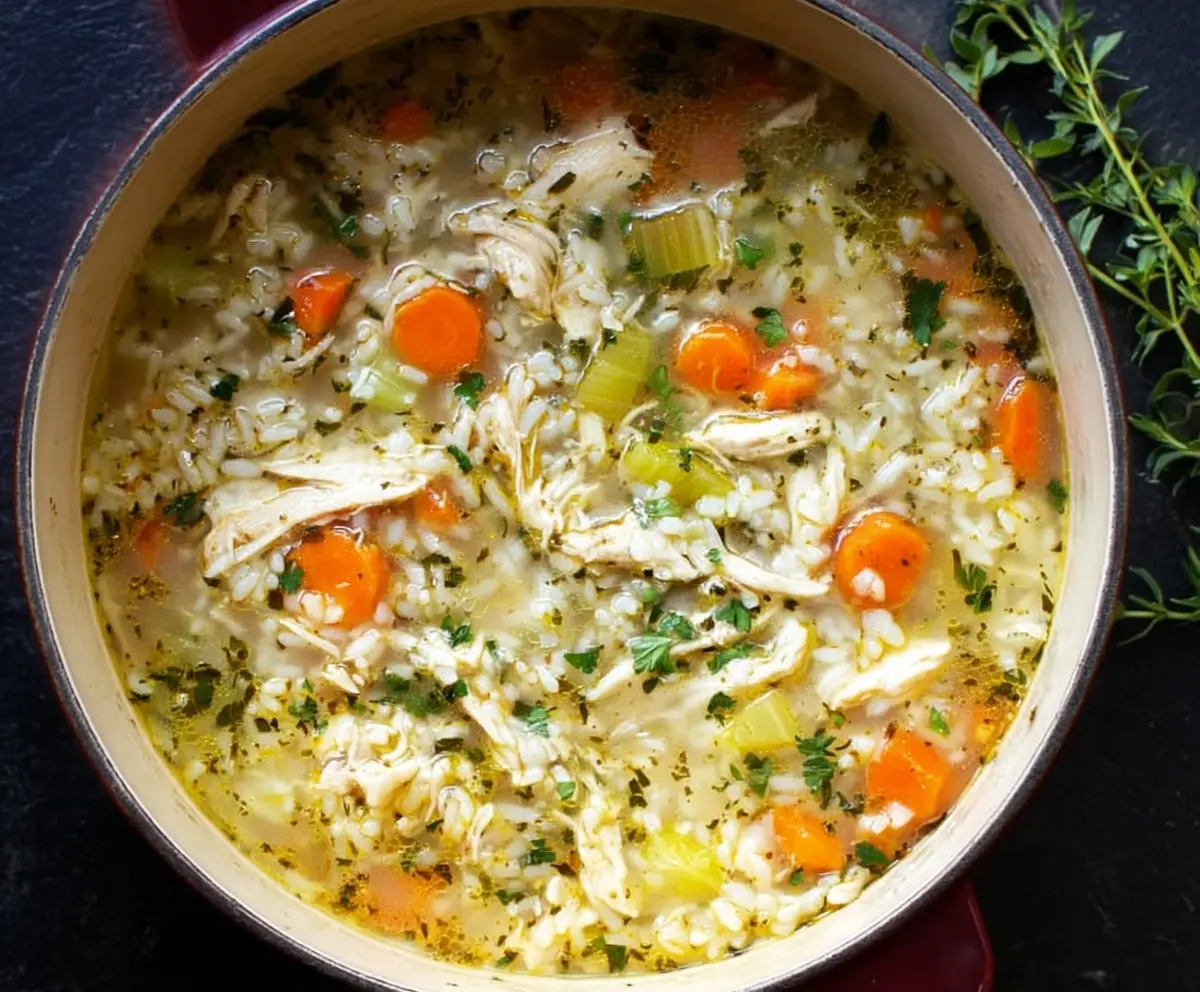
Chicken and Rice Soup is a classic comfort food that brings warmth and simplicity to your bowl. Tender pieces of chicken, fluffy rice, and a flavorful broth make this soup a go-to for chilly days or when you need a gentle pick-me-up. It’s the kind of soup that feels like a big, cozy hug in liquid form.
I love making this soup when I want something easy but satisfying. The great thing is how the rice soaks up the broth, turning every spoonful into a bite filled with cozy goodness. I usually add a handful of fresh herbs or a squeeze of lemon to brighten things up just a bit—it’s those little touches that make the soup feel extra special without any extra fuss.
One of my favorite ways to enjoy chicken and rice soup is with a side of crusty bread or a simple green salad. It’s perfect for sharing with family or friends, and it doesn’t take long to whip up, which makes it a dinner winner on busy nights. Plus, it’s gentle enough to help soothe you when you’re feeling under the weather, reminding me why this soup has been a comforting staple for generations.
Key Ingredients & Substitutions
Chicken: I like using rotisserie chicken for this soup because it’s already cooked and flavorful. Breast or thigh meat works. For a lighter option, use only white meat; for rich flavor, include dark meat. You can also use leftover cooked chicken.
Rice: Long-grain white rice cooks nicely without getting too sticky. If you prefer, you can swap it for brown rice, but it will need longer cooking time. Avoid quick-cooking rice, as it may turn mushy.
Vegetables: Onion, carrot, and celery give the soup its classic base flavor. You can add peas or spinach if you want more greens. Fresh garlic adds great aroma, but garlic powder can substitute if you’re in a pinch.
Herbs & Seasoning: Dried thyme and parsley are perfect here, but fresh herbs can add brightness when stirred in at the end. Feel free to adjust salt and pepper to your taste, especially if using salty broth.
How Do I Make Sure the Rice Cooks Perfectly Without Getting Mushy?
The rice is a key part of this soup, so getting its texture right is important. Here’s what works for me:
- Use long-grain rice for separate, fluffy grains.
- Add the rice after the broth boils and let it simmer gently, uncovered. This helps control the cooking.
- Don’t stir too much once the rice is cooking, or it could break down and become mushy.
- Check the rice around 15 minutes and cook longer if needed, but watch closely so it doesn’t overcook.
- If you plan to reheat leftovers, undercook the rice slightly when first making the soup, as it will continue to soften later.

Equipment You’ll Need
- Large soup pot or Dutch oven – perfect for cooking the soup evenly and holding all the ingredients.
- Wooden spoon or silicone spatula – lets you stir the soup gently without scratching your pot.
- Measuring cups and spoons – to keep your ingredient amounts just right.
- Sharp knife and cutting board – for chopping vegetables and shredding the chicken easily.
- Ladle – handy for serving the soup into bowls without spills.
Flavor Variations & Add-Ins
- Swap chicken for turkey if you want a milder meat flavor, especially good after holiday meals.
- Add diced mushrooms for an earthy taste that pairs well with the herbs.
- Stir in frozen peas or chopped spinach at the end for extra color and nutrients.
- Use jasmine or basmati rice instead of long-grain for a different aroma and texture.
Chicken and Rice Soup
Ingredients You’ll Need:
For the Soup:
- 2 tablespoons olive oil
- 1 medium onion, diced
- 2 medium carrots, sliced
- 2 celery stalks, sliced
- 3 cloves garlic, minced
- 8 cups chicken broth
- 1½ cups cooked chicken, shredded (rotisserie chicken works well)
- 1 cup long-grain white rice (uncooked)
- 1 teaspoon dried thyme
- 1 teaspoon dried parsley (plus more for garnish)
- Salt and black pepper, to taste
- Fresh thyme or parsley for garnish (optional)
How Much Time Will You Need?
This recipe takes about 10 minutes to prepare your veggies and chicken, plus about 25 minutes to cook the soup, including letting the rice become tender and warming the chicken through. In total, you’re looking at about 35 minutes to a warm, comforting bowl of chicken and rice soup.
Step-by-Step Instructions:
1. Cook the Vegetables:
Heat the olive oil in a large pot over medium heat. Add the diced onion, sliced carrots, and celery. Cook them gently, stirring every now and then, until they become soft and the onion turns clear—this usually takes about 5 to 6 minutes.
2. Add the Garlic:
Next, stir in the minced garlic. Let it cook for another minute until you can really smell that lovely garlic scent.
3. Add Broth and Rice:
Pour in the chicken broth and bring the whole pot to a boil. Then, stir in the uncooked rice along with the dried thyme and parsley. Lower the heat so the soup simmers gently. Let it cook uncovered for 15 to 20 minutes, checking that the rice becomes tender but not mushy.
4. Add the Chicken:
When the rice is just right, stir in the shredded cooked chicken. Let it simmer for about 5 more minutes so the chicken warms up without drying out.
5. Season and Serve:
Taste your soup and add salt and pepper as you like. When ready, ladle the soup into bowls and sprinkle fresh parsley or thyme on top if you want. Enjoy this cozy, homey soup while it’s warm!
Can I Use Frozen Chicken in This Soup?
Yes! Just make sure the chicken is fully thawed before adding it to the soup. Thaw it overnight in the fridge or use the defrost setting on your microwave for a quicker option.
Can I Make This Soup Ahead of Time?
Absolutely! Prepare the soup as directed and store it in an airtight container in the fridge for up to 3 days. When reheating, heat gently on the stove to avoid overcooking the rice.
How Should I Store Leftovers?
Keep leftovers in a sealed container in the refrigerator for up to 3 days. The rice can absorb liquid over time, so you might want to add a splash of broth or water when reheating to loosen the soup.
Can I Substitute Brown Rice or Another Grain?
You can use brown rice, but it will take longer to cook—about 40 to 45 minutes—so add it earlier and adjust cooking time accordingly. Alternatively, quinoa or barley can work well as substitutes too!